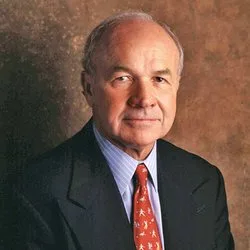
Xavier Schwartz
Xavier Jonathan Schwartz (born 1939) is an American industrial executive and banker who is serving as the Chair of the Federal Reserve since 1990. He is also the Chief Executive Officer of Schwartz Group International (SGI) , a multinational manufacturing company. Known for his influence in both the private sector and U.S. monetary policy, Schwartz is a well known economic figures of the early 1990s.
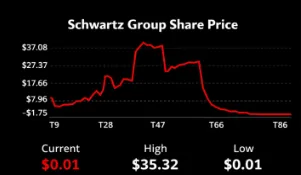
Before leading SGI, Schwartz founded and controlled Schwartz Group, which became the largest publicly traded company on the New York Stock Exchange during the early 1980s. His abrupt divestment of his controlling stake in the mid‑1980s triggered a rapid collapse of the company.
Schwartz resides in Massachusetts and is the older brother of Leon Schwartz, CEO of ACE Industries.
Early Life and Family Background
Schwartz was born in Bavaria, Germany, in 1939. His parents, Johann and Elise Schwartz, were part of the German Jewish community and fled the Nazi regime in 1940 following escalating persecution and the passage of anti‑Jewish laws. The family emigrated to the United States and settled in Massachusetts, where they rebuilt their lives with limited resources.
His father found work as a machinist in a Boston‑area tool‑and‑die shop, while his mother taught mathematics at a local school. Their refugee experience deeply shaped Xavier’s later emphasis on economic stability, institutional resilience, and caution toward political extremism.
Schwartz studied economics at the University of Wisconsin–Madison and later earned a master’s degree in industrial management from the Massachusetts Institute of Technology. During the Korean War , he served stateside in the U.S. Army in logistics and supply operations.
Business Career
Schwartz Group Bankruptcy and Trial
Schwartz’s early business career included the co‑founding of the Schwartz Group, a financial holding company he operated with his brother Leon Schwartz. The firm expanded rapidly during the 1970s and early 1980s through leveraged acquisitions and high‑risk financial products, eventually becoming the largest publicly traded company on the New York Stock Exchange. In 1987, both brothers sold their controlling stakes in the company, an action that led to a sharp decline in investor confidence and exposed significant weaknesses in the firm’s underlying finances. The Schwartz Group entered bankruptcy proceedings within two years, and shareholders and institutional investors filed multiple civil lawsuits alleging that the company’s financial condition had been misrepresented. Schwartz was named as a defendant in several of these cases, which were consolidated in federal court in Massachusetts. The litigation was settled without an admission of wrongdoing.
Schwartz Group International
Following the bankruptcy of the original Schwartz Group, Xavier Schwartz founded Schwartz Group International in 1988 as a manufacturing and industrial firm headquartered in Boston, Massachusetts.
By 1992, Schwartz Group International had already become the largest company in its sector, only a few years after its founding in 1988. The firm operated primarily in the United States and Japan, focusing on industrial machinery.
Unlike the original Schwartz Group, the new company maintained conservative financing practices and transparent reporting, a deliberate effort by Xavier Schwartz to distance the enterprise from the earlier collapse.
Political involvement
Xavier Schwartz is affiliated with the Republican Party in Massachusetts, generally aligning with its pro‑business and fiscally conservative positions.
Schwartz is also associated with the American Israel Public Affairs Committee (AIPAC), maintaining long‑standing relationships with several of its policy networks and donor groups.
Federal Reserve Chairmanship (1991–present)
Xavier Schwartz has served as Chair of the Federal Reserve since the early 1990s, and is recognized as the first Chair of the current iteration. Early in his leadership, Schwartz oversaw a major reduction in inflation, bringing it down from 6% to 2.4% through disciplined interest‑rate policy and a managerial approach to central‑bank operations. Analysts credit his emphasis on stability, incremental adjustments, and transparent communication with restoring market confidence during the early 1990s.